
Mapping the Venture Capital Landscape

Investor Maps
Bi-weekly insights for venture investors
Venture capital relies on pattern recognition to invest in and advise startups. Frameworks codify pattern recognition that we use, often unconsciously. Charlie Munger applied a checklist of a hundred mental models from many fields to guide Berkshire Hathaway investment decisions. Venture capital also applies many frameworks that are distinct to startup innovation. These articles map the venture territory by expounding on the frameworks we often use implicitly.
Mental Models for Venture Investors
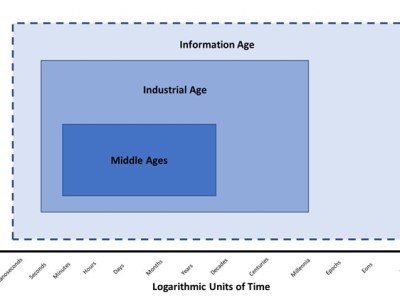
The Long and Short of It: How Frames of Reference Impact our Vision
Our frame of reference informs how we identify opportunities and the breadth of our vision

Investment Best Practices: The Role of the Wingman
Wingmen cover blind spots; offer perspective; with provide an informed, arms-length view; and coalesce team views to help the sponsor engage effectively with all stakeholders.

The Power Law: Energizing Returns on Chance in Innovation and Investing
The Power Law reminds us to think bigger. People systematically misperceive long tail risk, which creates arbitrage opportunities for those who manage uncertainty well. We discuss five strategies to identify and exploit long tail opportunities.
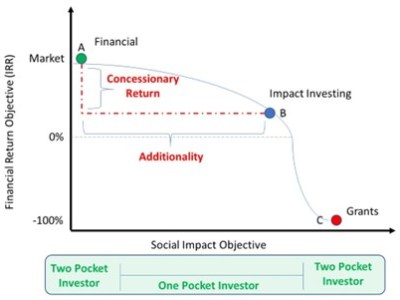
Impact Investing: Socially Responsible Investing Reimagined
Venture philanthropy has merit when the social return exceeds the financial return and surpasses the return threshold

Chess, Computers and the Time Value of Money
Venture fund partners are rewarded for Return on Investment. Limited partners in venture funds focus on Internal Rate of Return. Interests are generally but not always aligned. Differences emerge when investors think differently about the time value of money.

Founder’s Dilemmas: Strategies to Avoid Pitfalls that can Sink a Startup
Founding teams must align on three Rs: Relationships, Roles & Rewards. Startups that do have resilient founding teams but misalignment on any of these are hidden, ticking bombs that explode at the most inopportune moments. Here are six strategies to avoid cofounder pitfalls that can sink a startup.
Seeking Alpha: Second Level Thinking in Venture Capital
Innovation relies on contrarian thinking. Yet the Gartner Hype Cycle shows that mimicry is prevalent in venture capital. The two frameworks remind venture investors to think differently.

Total Available Market: Assessing Opportunity in Emerging and Invisible Markets
TAM can be a valuable tool for founders, but it is often misused, especially when startups pursue markets that do not yet exist. This article explains how founders and investors can use a multistage TAM framework to assess and expand startup opportunity over time.
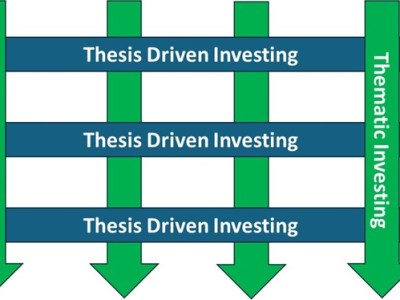
Seeking Alpha: Thesis Driven v. Thematic Investing
Thesis-driven and thematic investing are two strategies to build expertise and generate superior venture returns. These different strategies are complementary as illustrated by our investment experience over the past two decades.

Six Product Market Fit Principles That Drive Startup Success
Product Market Fit progresses through three phases: product, business and financial validation. We discuss six practices that improve startup success by accelerating progress through these three stages.

Investment Filters: Simple Rules to Hit Investment Targets
Investment Filters set boundary conditions and provide simple guidelines for investments consistent with fund strategy. Filters coordinate fund activity to focus on investments that matter most while permitting flexibility to pursue moonshot investments.

Founder Fit: Insight Driven Innovation
Founder Fit matches skills, experience and insights to increase startup success

Experience vs. Insight: What Makes a Successful Founder?
Insight is essential for successful startups. Experience is too – but in a different way than many believe.
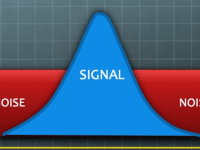
Seeking Alpha: How Investors Derive Signal from Noise
Summarizes a method to reduce bias and noise in investment decisions

Superforecasting: Ten Investment Practices to Improve Performance
Ten practices to improve venture investment performance based on wisdom from experts and 35 years of experience

The Checklist Manifesto: Three Practices to Improve Venture Capital Performance
Checklists can reinforce consistent, product investment practices

Investing in Generative Artificial Intelligence & the Gartner Hype Cycle: Is the Hype Worth It?
Reviews 30 years of Gartner Hype Cycle data and 50 years of software innovation for insights on AI prospects

Turning the Flywheel to Reach Escape Velocity
Startup strategies to achieve escape velocity and win new markets

Startup Pacing: Accelerate Growth to Win New Markets
Six factors that influence startup pacing to stay ahead of competitors and in sync with customers

Seeing Clearly: Three Startup Strategies to Survive & Thrive the Gartner Hype Cycle
Achieving Product Market Fit while customer interest is high helps startups survive downturns

Three Cardinal Sins of Investing: How Artificial Intelligence Can Help Identify Founder Fit
Artificial intelligence can help identify Founder Fit for those investing in early-stage startups

Regulatory Capture: Navigating the Third Rail of Innovation
Government has helped 25% of our startups and hurt others. Here are six strategies to win government as an ally.

Paradigm Shifts: Ten Winning Strategies for Disruptive Innovators
Paradigm shifts are first dismissed then vigorously attacked. Here are ten strategies for disruptive startups to accelerate adoption

The Five Forces: Five Startup Strategies for Winner Take Most Markets
Industry structure dictates profit potential. Here are five strategies enabling startup to influence industry structure to their advantage.

Exit Strategy: Reverse Engineering Successful Outcomes from the Outset
Companies are bought not sold, yet this describes how startups can reverse engineer successful outcomes from the outset

Mapping the Territory: Exploring Uncharted Markets
Maps guide our daily lives. Here are six strategies to help startups navigate new markets
 Startup Cairns